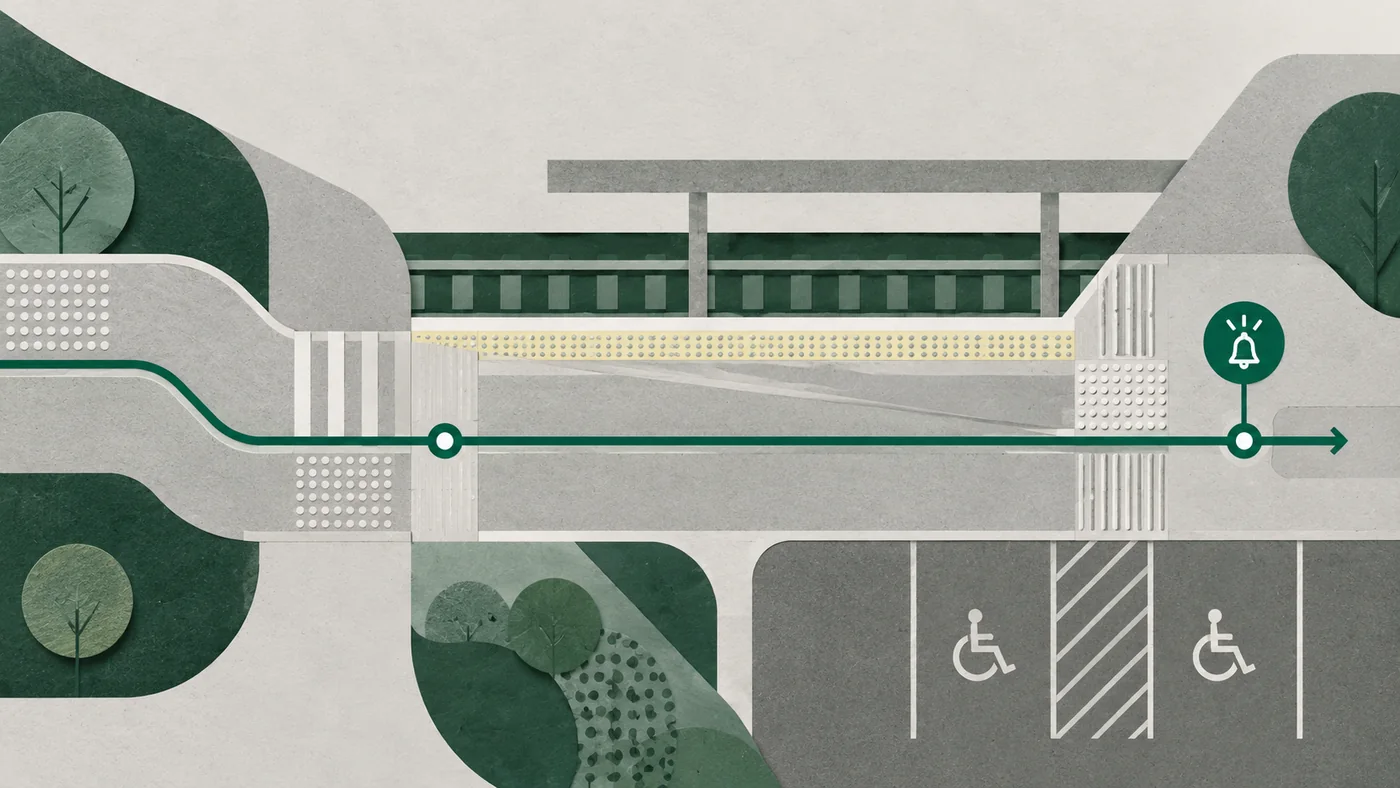
You must be 20 or older to enter casino gaming areas in New Zealand. Bring current accepted photo ID and distinguish the R20 floor from the wider dining, hotel and entertainment precinct.
✓Last checked: 4 October 2026
Accessible travel is a chain of decisions. Confirm each transfer and the venue entrance before leaving.
Gaming areas are R20
Under-20 visitors cannot enter the casino gaming floor. Alcohol service has separate rules, and non-gaming facilities can have different access conditions.
Carry current physical photo ID
Official venue lists include current passports and qualifying New Zealand identification. Requirements can change and additional checks may apply, so verify before travel.
Plan the final metres
Check the precise entrance, parking path, lifts, service-animal policy and any assistance required. A transport service being accessible does not guarantee every transfer is step-free.
Once the door checks are settled, parking and transport covers planning the arrival itself.
Sources, changes and corrections
Operational details can change. Check the official source before travel and report a discrepancy so the affected field can be reviewed.
Prepare the person, the document and the complete access chain
An age check, an identity document and a usable route answer different questions. This preparation guide keeps those decisions separate so one successful step does not conceal an unresolved entrance or transfer.
Start with the specific area each person wants to enter
Identify the destination for every person: gaming floor, restaurant, hotel, attraction, bowling or a meeting place. Both North Island casino operators publish an age restriction of 20 for their gaming areas. An adult restaurant reservation does not establish that every person on the booking may enter an adjoining restricted area.
A companion who is 18 or 19 should not interpret an identity card’s name or general adult status as casino permission. The relevant question is whether the person meets the gaming-area age requirement. If not, select a permitted non-gaming activity and an approach confirmed by the responsible outlet, not a shortcut through the gaming floor.
For a younger companion, confirm the outlet’s supervision requirements, booking and access route directly. A general precinct map cannot answer every age or supervision condition. Agree on a meeting point everyone can use, and keep the plan complete if the adult who considered gaming decides not to enter.
Age eligibility is not a promise of admission. Current documents, other entry conditions, exclusions and the venue’s decision still matter. This website cannot clear a visitor for entry or arrange an exception. The useful result of preparation is knowing what the responsible venue needs, not receiving an approval from an independent guide.
Treat the actual document as a task to check before departure
Find the document you intend to carry and check that it is current. Auckland’s visitor FAQ specifies physical identification and names accepted categories; Hamilton publishes its own information for admission and further checks. Read the current property-specific list, especially for an overseas document or a category not clearly described.
Ask a focused question if acceptance determines whether to travel: I intend to visit the named property on this date and have this category of current physical document; what verification applies to casino entry and the card-registration task? Use the operator’s appropriate enquiry channel and describe the category before sending sensitive document images anywhere.
Do not give this independent website a passport scan, licence number or other identity evidence. It does not perform casino verification. Follow the responsible organisation’s own security and submission instructions if it requests information through a legitimate process. A casual public comment is not a suitable place for those documents.
A mobile photo, hotel booking, membership account or transport confirmation serves a different purpose from the current physical document requested at admission. Keep the document with the person who needs it. If one companion carries all the bags and leaves early, another person should not lose access to their identification or the essentials needed to return.
Different checks should not be combined into one assumed approval
Check
Question to ask
Not established by
Gaming-area age
Does this person meet the published entry restriction?
A meal reservation or the name of an 18+ card.
Identification
Is this actual current physical document suitable for the task?
A photograph or another property’s older FAQ.
Play-card registration
Which current verification and card process applies?
Having located the entrance or passed an age enquiry.
Further transaction checks
What does the operator request for this interaction?
An assumption that no other check follows admission.
Describe access requirements as separate stages
Begin at the real origin and follow the chain to the chosen activity: getting into transport, boarding, any interchange, the final stop or parking space, the building entrance and movement inside. Then repeat it for the return. A favourable description of one vehicle or building is not confirmation that every other stage works.
State the practical requirement rather than asking only whether a place is accessible. An essential lift route, vehicle boarding arrangement, mobility-aid space, rest point or assistance requirement needs an answer for the actual service and destination. You do not need to share more personal information than the responsible provider needs to handle that enquiry.
Keep each answer beside its stage. The transport provider confirms the vehicle and boarding process; the property confirms its entrance and internal approach; a named outlet confirms its own facility and booking arrangements. Do not ask one organisation to guarantee facilities or operational details controlled by another.
Identify the stage that would make the whole visit unsuitable if it failed. Confirm that stage before spending on the optional evening. If a suitable arrangement cannot be confirmed, revise the route, activity or date. The plan should not depend on discovering an unexpected workaround after reaching the gaming entrance.
The final entrance needs a named destination and current directions
In Auckland, distinguish the hotel, attraction, restaurant and gaming destination within the CBD precinct. In Hamilton, the operator separates the Victoria Street pedestrian entrance from vehicle access through Alma Street. Name the destination when asking about an approach rather than referring only to the casino’s street address.
From a public-transport stop, ask whether the final route suits the practical requirement. A published approximate walking time does not describe surface, gradient, crossings, luggage or the individual traveller’s pace. Review the current approach and allow the person using it to decide what is manageable.
For a booked vehicle, confirm the drop-off point and what assistance can actually be arranged. A door-to-door phrase in a quotation should not be treated as a promise that a vehicle can stop at every doorway. Ask separately about the pickup on departure, because a suitable arrival point may not be a usable waiting location later.
Check what happens if the preferred approach is temporarily unavailable. The answer may be another entrance, staff guidance or a changed plan, but it must come from the responsible property or provider. Do not assume a closed lift or altered stop can always be replaced by stairs, an unverified shortcut or a companion lifting equipment.
Use one concise enquiry and retain the answers that matter
A useful enquiry contains the intended date, named activity, arrival mode and practical requirement. For example: I am arriving by a booked vehicle for a restaurant reservation; which entrance should the driver use, can the required step-free approach be confirmed, and what is the appropriate pickup point afterward? This is an enquiry template, not a claim that these arrangements are already available.
If an aid or assistance arrangement matters, ask about the actual vehicle and facility rather than relying on a category label. Confirm whether advance notice is required and how to recognise the agreed arrangement on the day. A general acknowledgement of an email should not be interpreted as confirmation of every point in the request.
Record who provided the answer, the date and the requirement it covers. Keep a booking reference and the relevant instruction easy to retrieve, with an appropriate offline note if the phone is inconvenient. Do not distribute sensitive documents or account credentials to companions when a destination and contact reference are sufficient.
A change in the date, terminal, vehicle or activity can make the earlier answer incomplete. Tell the provider what changed and ask whether the arrangement remains valid. The preparation note is a record for the actual visit, not a permanent assurance that another journey or another property will work in the same way.
A worked group case without assuming everybody follows the same path
Consider a visitor using a mobility aid, an adult companion interested in gaming and a younger companion booked for a permitted non-gaming activity. This is an illustrative planning case. First they confirm the outlet, supervision and approach for the younger person; separately they resolve the gaming visitor’s age, identification and play-card requirements.
Next they check the complete accessible arrival and return, including vehicle space or any interchange, the named entrance and the facility they intend to use. They choose a meeting point that does not require the younger person to cross the gaming boundary. Everybody retains access to essentials and knows how the departure will work.
If the gaming visitor’s document question is unresolved but the non-gaming booking works, they can keep the meal or other activity and omit the floor visit. If the essential transport or entrance requirement fails, they revise the whole visit. The order matters: a confirmed restaurant table cannot repair an inaccessible journey to that table.
On the day, a changed pickup or closed approach is a reason to contact the organisation responsible for that stage. Nobody should have to persuade another companion to use a route that does not meet their requirement merely to preserve the optional gambling activity. A complete evening is one each person can participate in or leave on the agreed terms.
Review the return while the outward arrangement is still clear
A boarding arrangement for arrival does not automatically arrange the reverse journey. Confirm the dated departure, the pickup point and assistance needed at that time. If one person leaves earlier, make sure that departure has its own workable chain instead of depending on the person who plans to remain.
Keep the return affordable without gambling results and decide what change would trigger the fallback. An unavailable lift, missed connection or unsuitable vehicle should lead to a confirmed alternative or a revised finish, not an indefinite wait beside a restricted entrance. The essential journey remains the priority.
If you no longer want to gamble or need support to stop, the responsible-gambling help page is a separate pathway. Accessibility preparation does not obligate a person to enter, wager or stay. You can complete a meal, attraction visit or return home without converting it into a casino session.
Questions that change this plan
Does an accessible transport service confirm an accessible venue visit?
No. Check the full chain, including interchanges, the final stop, the named entrance and the intended facility. Each responsible provider confirms the stages it controls.
Can I send identity documents to this guide for approval?
No. This independent guide does not verify casino admission or create play-card accounts. Ask the actual operator about document categories and follow its legitimate verification process where needed.
Can an under-20 companion cross the casino to reach another outlet?
Do not plan that shortcut. Confirm a permitted route and the named outlet’s conditions directly. Use a meeting place everyone can reach without entering restricted gaming areas.
What if the access arrangement or document acceptance cannot be confirmed?
Treat that condition as unresolved. Ask the responsible organisation before travelling solely for that activity, or change the route, activity or date. Do not turn uncertainty into a promise of admission.
Practical detail
Check a usable entrance as carefully as the ID
Access is a sequence of specific questions
Identify the transport stop or car park, the approach to the building, the entrance in use and any lift or internal transfer. A general accessibility statement can be useful background, but it does not establish that every link is suitable for a particular traveller or available at the planned arrival time.
When asking the operator, describe the practical requirement without sending sensitive identity information to this guide. Ask for the step-free route, drop-off point, lift access, assistance and facilities you need. Request an alternative if a required entrance or transfer is temporarily unavailable.
Example: two checks fail in different ways
A visitor may have a usable entrance but an unaccepted document, or accepted identification but an unsuitable final transfer. Both plans need a change before departure. Do not assume that solving the age check solves the arrival, or that an accessible vehicle guarantees casino entry.
Mixed-age groups should identify facilities everyone can use without entering a gaming area. If one companion is not eligible to enter, arrange a meeting point and activity outside the restricted boundary. Avoid leaving someone to wait at a gaming-floor entrance while the rest of the group explores.
 Best casinos available in New ZealandUpdated 7 November 2026