NZ-NI-0312 · source record 6 October 2026
$2 deposit casino NZ: what a two-dollar minimum really gets you
 Best casinos available in New ZealandUpdated 7 November 2026

A true $2 deposit casino is rare. Most online casinos open to New Zealanders set their lowest deposit higher, and where a two-dollar figure does appear it usually applies to one payment method or one introductory promotion, not to the whole cashier. People still search ‘$2 deposit casino nz 2023’ because lists from that year remain online, but minimums change with every payment-provider contract, so an old list is a starting point at best. The only reliable source is the cashier itself, viewed while logged in, with NZD selected.
Supplier sources below. Operator eligibility needs a separate check.

BigBot Crew by Quickspin uses four rows, five reels and 40 paylines. Its important distinction is between a partial robot and a full-reel BigBot: only the completed form drives the published respin and spin-extension rules.
Does a real $2 minimum exist?
It can, in three distinct forms, and it helps to know which one a page is talking about.
- A cashier-wide minimum. Every method accepts two dollars. This is the rarest version.
- A method-specific minimum. One payment route goes that low while cards and bank payments start higher. You only find out by opening each method in turn.
- A promotional entry point. A first-deposit offer can be triggered by a very small payment, after which the normal, higher minimum applies to every later deposit.
The third form is the one most ‘$2 deposit’ lists are really describing. That is not dishonest in itself, but it matters: a casino you can enter for two dollars once is a different thing from a casino you can keep using at two dollars a time.
There is also the currency question. A minimum quoted as ‘2’ in another currency is not two New Zealand dollars. If the account is not held in NZD, your bank converts each payment, and its own fee can outweigh a deposit this size.
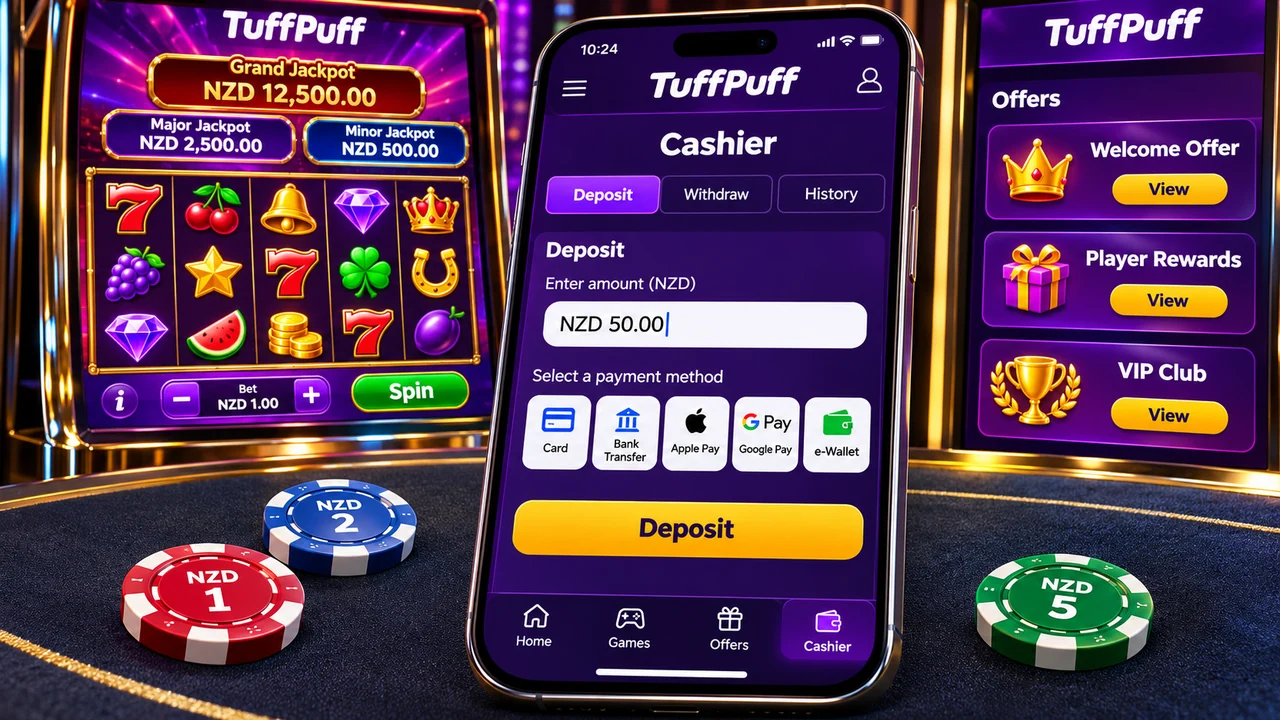
Why cashiers set the minimums they do
Operators do not pick minimums to annoy low-stakes players. Each deposit costs the casino money to accept. Payment providers charge the operator for a transaction, and part of that charge is commonly a fixed amount regardless of size. On a two-dollar payment a fixed charge can swallow most of the deposit before a single spin is played.
Then come the costs that do not shrink with the deposit: identity checks, fraud screening and customer support. A player who pays in two dollars needs the same verification as one who pays in two hundred. The minimum is the point at which the operator expects a transaction to be worth processing, and that point differs by method because each method costs a different amount to run.
That is also why minimums move. When an operator changes payment provider, or a provider reprices, the cashier limits follow. Nobody announces it. A page written eighteen months ago cannot know.
How limits vary by payment method
The table describes tendencies seen across NZ-facing cashiers, not the limits of any one site. Treat it as a guide to where to look first, then confirm every figure in the cashier.
| Method | Small deposits | Payout by same route | Check in the cashier |
|---|---|---|---|
| POLi | Often suited to modest amounts where offered | No, deposit-only | Whether your bank is supported |
| Debit card | Minimum set by the operator, varies widely | Sometimes | Whether your bank allows gambling payments |
| Bank transfer | Usually a higher floor | Yes | Reference details and arrival time |
| E-wallet | Can go low at some operators | Usually | Wallet fees and bonus eligibility |
| Prepaid voucher | Tied to voucher values on sale | No | Smallest voucher you can actually buy |
| Crypto | Low on paper | Yes | Network fee compared with the deposit |
Two rows need a comment. With crypto, the casino's minimum may be tiny while the network fee to send the coins is not, so a ‘two-dollar’ deposit can cost noticeably more than two dollars to make. With vouchers, the casino's minimum is irrelevant if the smallest voucher in the shop is larger.
Note too that credit cards are being closed off: under New Zealand's new online casino licensing rules, licensed operators cannot accept credit cards or buy-now-pay-later. Plan around a debit card or a bank-based method from the outset.
The gap between paying in and cashing out
This is the part the two-dollar headline leaves out. Every cashier has a second number: the minimum withdrawal. It is almost always higher than the minimum deposit, sometimes by a wide margin, because paying money out costs the operator more than taking it in.
Follow the consequence through. You deposit two dollars and have a good run. If your balance is still below the minimum withdrawal, you cannot take it out. The choices are to keep playing until the balance is higher or gone, or to deposit more to reach the threshold. Neither is what a careful low-stakes player had in mind.
As an illustration with made-up figures: if a site's minimum withdrawal were $20, a $2 depositor would need to multiply the balance tenfold before a single cent could leave. That is possible on a volatile pokie and unlikely on any given night.
So read the withdrawal page before the deposit page. Note the minimum for the method you would be paid by, any fee on small payouts, and whether verification must be complete first. Identity checks apply to a two-dollar account exactly as they do to any other; expect to show photo ID and proof of address before a first payout.
What two dollars buys on the reels
Be realistic about the playing time. The lowest total bet on many online pokies sits somewhere around ten or twenty cents a spin, and the exact floor is shown in each game's stake selector.
| Stake per spin | Spins from $2 |
|---|---|
| $0.10 | 20 |
| $0.20 | 10 |
| $0.50 | 4 |
Wins extend that, of course, but twenty spins is a very short sample. On a high-volatility game it is entirely normal to see twenty spins pass with nothing of note. If the aim is to make a small balance last, three things help: choose the lowest stake the game allows, prefer low-volatility titles that pay small amounts often, and leave quick-spin switched off.
Check the game help before you start. It states the minimum bet, the return setting in use at that casino and whether all features are available at the lowest stake. Our studio pages, such as the Quickspin catalogue guide, show where each provider keeps that information.
Jackpot pokies at minimum stake
Low-deposit pages love to mention progressive jackpots, and it is true that a prize pool does not care how much you paid in. Two details get skipped. Some jackpot games only make the top prize available above a certain bet, or scale the chance of triggering it with the stake; the rule is in the game help. And jackpot titles are often built with a lower base-game return, because part of every bet feeds the pool. On twenty spins the practical effect is a shorter session, so open the rules before choosing one for a two-dollar balance.
Table games on a tiny balance
Software roulette and blackjack sometimes accept very small chips, which can stretch two dollars further than a pokie does. Live dealer tables generally do not; their minimum stakes are set with a staffed studio in mind, and one hand can exceed the whole deposit.
Bonuses tied to a tiny deposit
Low-deposit promotions follow a familiar shape: pay in a very small sum, receive a batch of free spins or a small bonus. The appeal is obvious. The value depends on the same terms as any other bonus, and at this scale two of them decide nearly everything.
The first is wagering on the winnings. Whatever the spins return becomes a bonus balance that must be bet a set number of times. The second is the maximum cashout, which limits what can be withdrawn from the promotion however well the spins go. Add the maximum bet rule and the expiry date and you have the full picture.
Check, too, which deposit methods qualify. Promotions often exclude certain e-wallets or vouchers, and those may be the very methods that allow a small deposit in the first place. If the offer needs no deposit at all, the logic is slightly different; we cover that in how no deposit bonus terms really work.
A fair way to look at it: a two-dollar promotion buys some extra spins and a look around the lobby. Expecting it to produce a withdrawal is expecting a lot.
$1, $2, $5 or $10: picking a tier honestly
Search results slice the low-deposit market into neat tiers. In practice the differences between them are about choice and friction, not about generosity.
| Tier | Choice of sites | Methods likely to work | Main catch |
|---|---|---|---|
| $1 to $2 | Very narrow | One or two, often promotional | Withdrawal minimum far above the deposit |
| $5 | Wider | More of the cashier | Bonus eligibility may start higher |
| $10 | Broad | Most methods at many sites | Still worth checking payout floor |
If the real goal is to try a casino cheaply, a slightly larger deposit at a site with a matching low withdrawal minimum can be the better deal than a two-dollar entry that locks the balance in. If the goal is strictly to cap spending, a deposit limit set in the account does that job more reliably than hunting for the lowest minimum, and it works at any site that offers the tool.
One more comparison is worth making before settling on a tier: the cost per transaction on your side. If your bank or wallet charges anything per payment, that charge is the same on two dollars as on twenty, and on the smaller sum it takes a far larger share. A single modest deposit that lasts the week is usually cheaper to make than several tiny ones.
A worked run from deposit to payout request
Here is how a careful two-dollar trial might unfold. The site and every figure are hypothetical; the sequence is what matters.
- You register, choose NZD and verify your email. The cashier shows that one bank-based method accepts $2, while cards start higher.
- Before paying, you open the withdrawal page. Suppose it lists a $20 minimum by bank transfer. You now know the target the balance has to reach.
- You deposit $2 and decline the bonus, so no wagering attaches to the money.
- You choose a low-volatility pokie at 10 cents a spin. Twenty spins is the floor; small wins stretch it to perhaps forty or fifty.
- Most of the time the balance ends at zero within a few minutes. That is the expected result, and the trial has still told you how registration, the cashier and the games behave.
- On the less common occasion that a feature lands and the balance passes the withdrawal minimum, you stop, upload ID and request the payout to see how the operator handles it.
Seen this way, the deposit is a fee for inspecting a casino from the inside, with a small chance of a payout attached. If you want the withdrawal side tested as a matter of course, the deposit needs to be at least as large as the minimum withdrawal, played lightly or not at all, and then requested back. Some operators require a deposit to be staked once before it can be withdrawn, so check that rule first.
What the run should not become is a series. Five separate two-dollar deposits in an evening is a ten-dollar session bought in the least efficient way, with five sets of processing behind it and no better odds.
Slip-ups that cost more than the deposit
- Topping up to reach the withdrawal minimum. Adding money so that a small balance can be cashed out often ends with both amounts played away.
- Paying a conversion fee on a tiny payment. A foreign-currency account can make a two-dollar deposit cost noticeably more at your bank.
- Accepting a bonus by default. A pre-ticked box can attach wagering to a deposit you meant to keep free of conditions.
- Staking above the bonus limit. On a small balance, people raise the bet to ‘make it count’ and breach the maximum bet rule.
- Losing track of repeats. Small deposits feel weightless individually. Add them up weekly.
- Trusting the list over the cashier. If the two disagree, the cashier wins every time.
The fix for most of these is a deposit limit. Set it in the account on day one, at a weekly figure you have chosen in a calm moment, and small top-ups stop being able to pile up unnoticed.
Old lists and the 2023 problem
A year in a search phrase is a request for something current, and it tends to return the opposite: pages published once and re-dated ever since. Three things have shifted since those lists were compiled. Cashier minimums have been repriced. Some operators have withdrawn from New Zealand or changed owner. And the legal ground has moved, which the next section covers.
To test any claim of a two-dollar minimum, do this in order:
- Open the operator's own payments or banking page, not the review that sent you there.
- Confirm that New Zealand residents are accepted and NZD is an account currency.
- Register without depositing, open the cashier and click through each method to see its minimum.
- Ask live chat to confirm the minimum deposit and minimum withdrawal for your method, and save the reply.
- Only then decide whether the pair of numbers makes sense together.
It takes about ten minutes and costs nothing. If the cashier shows a higher figure than the list promised, the cashier is right.
Where the law stands for small-stakes players
Deposit size has no bearing on legality. The Gambling Act 2003 barred online casino operations run from within New Zealand while leaving individuals free to play at sites based overseas, which is how offshore casinos came to serve Kiwis at all.
The Online Casino Gambling Act 2026 replaces that arrangement with licensing through the Department of Internal Affairs. Operators without a licence must stop offering online casino gambling to New Zealanders from 1 December 2026, and licensed ones must provide spending limits. For a low-deposit player the practical point is simple: a small balance left at an operator that exits the market is a nuisance to recover. Before depositing even two dollars, check what the site says about New Zealand accounts after that date.
Two dollars online or an evening on the floor?
They answer different wants. A small online deposit is a way to see how a game plays for the price of a bus fare. A visit to a North Island casino is an outing, with an entry age of 20 and a trip home to plan; our SkyCity Auckland visitor page covers the practical side. Neither is a way to make money, and both are better with a figure fixed in advance.
Online play is for adults: 18+, and only with money you have already decided you can spend.
$2 deposit questions from Kiwi players
Can I win real money from a $2 deposit?
Yes, a win from a small stake is paid at the same odds as any other. Whether you can withdraw it depends on reaching the site's minimum withdrawal and passing verification. Check both before you treat a small balance as money in hand.
Which payment method is best for very small deposits?
There is no single answer, because each operator negotiates its own limits. Bank-based options such as POLi and some e-wallets are the first places to look, then debit cards. Open every method in the cashier and compare the minimums side by side.
Do I still have to verify my identity for two dollars?
You do. Operators verify the person, not the amount, and the check is normally required before a first withdrawal. Uploading documents straight after registering avoids a delay later.
Why does the cashier show a higher minimum than the review said?
Reviews age, promotions end and payment providers change their pricing. The figure may also have applied to a different currency or to a single method. The logged-in cashier is the current, binding version.
Is a $1 deposit casino better than a $2 one?
Only if the rest of the terms are better. At this level the deposit figure matters less than the minimum withdrawal, the methods available and whether the site will keep serving New Zealand. Compare those three before the headline number.